

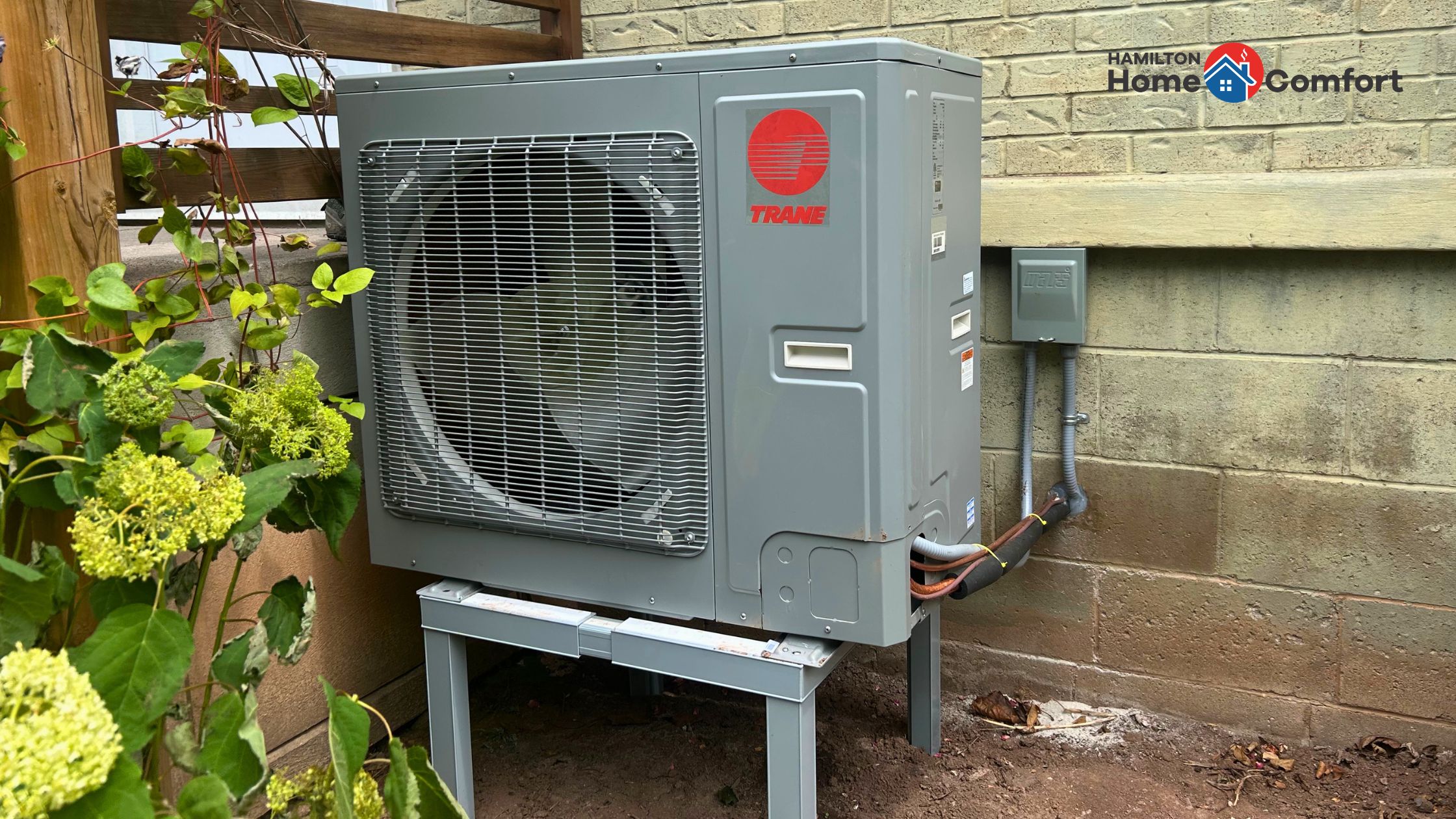
Thinking about installing a heat pump in Ontario? You probably have a few questions. Will it keep your home warm in January? Does it replace your air conditioner? And what happens to the furnace you already own?
These are good questions to ask before choosing equipment.
At Hamilton Home Comfort, we help homeowners in Hamilton, Stoney Creek, Burlington, Ancaster and surrounding communities with heat pump installation, repairs and maintenance.
Let’s walk through how these systems work and what you should consider before making the switch.
What Is A Heat Pump?
A heat pump is an electric system that can heat and cool your home. Instead of creating heat by burning fuel, it moves heat from one place to another.
The most common type in Canadian homes is an air source heat pump. It exchanges heat with the outdoor air.
Another heat pump type is a ground source system. These exchange heat with the ground through buried piping. They require more extensive installation. In this guide we focus on the air source heat pump.
You can choose a ducted system that distributes air throughout your home or a ductless system with indoor units serving specific areas.
How Does A Heat Pump Work For Heating And Cooling?
It might seem strange that cold outdoor air contains useful heat. But it does.
In heating mode, the heat pump’s refrigerant absorbs heat from outside. A compressor increases the refrigerant’s pressure and temperature so the system can transfer that heat into your home.
During summer, the process reverses. The heat pump removes heat from inside your house and releases it outdoors.
That means the same equipment can warm your living room in February and cool it in July. In cooling mode, it also removes some indoor moisture.
Because it moves heat, a heat pump can deliver more heating energy than the electrical energy it consumes. However, its efficiency changes with outdoor temperatures and operating conditions.
Heat Pump Vs. Furnace: What’s The Difference?
A gas furnace burns natural gas to create heat. An electric furnace uses electric resistance heating. A heat pump uses electricity to move heat.
One of the key things you may also notice is a difference in how the warmth feels.
Furnaces often deliver hotter air through the vents, while heat pumps can provide gentler, steadier warmth over longer cycles. It’s important to know that a less-hot supply of air does not automatically mean something is wrong.
Unlike a heat pump, a furnace also cannot cool your home on its own. You will need separate AC cooling equipment.
If you’re weighing your options, our guide to furnaces in Hamilton and Southern Ontario explains furnace operation, maintenance and replacement considerations.
Read more about the differences between heat pumps and furnaces.
Heat Pump Vs. AC: Can It Replace Your Air Conditioner?
Yes. A heat pump can provide your home’s air conditioning. A conventional air conditioner moves indoor heat outside. While a heat pump does this too, it can also reverse the process to provide heating.
If your air conditioner needs replacing, this is a sensible time to compare both options.
However, installing a heat pump does not mean you automatically have a better cooling system simply because it also heats. Cooling efficiency, sizing, airflow and installation quality still matter. At Hamilton Home Comfort, we provide a comparison for the actual models being proposed.
For a whole-home ducted installation, you would typically use the heat pump for cooling rather than keep a separate central AC system.
What Is Hybrid Heating?
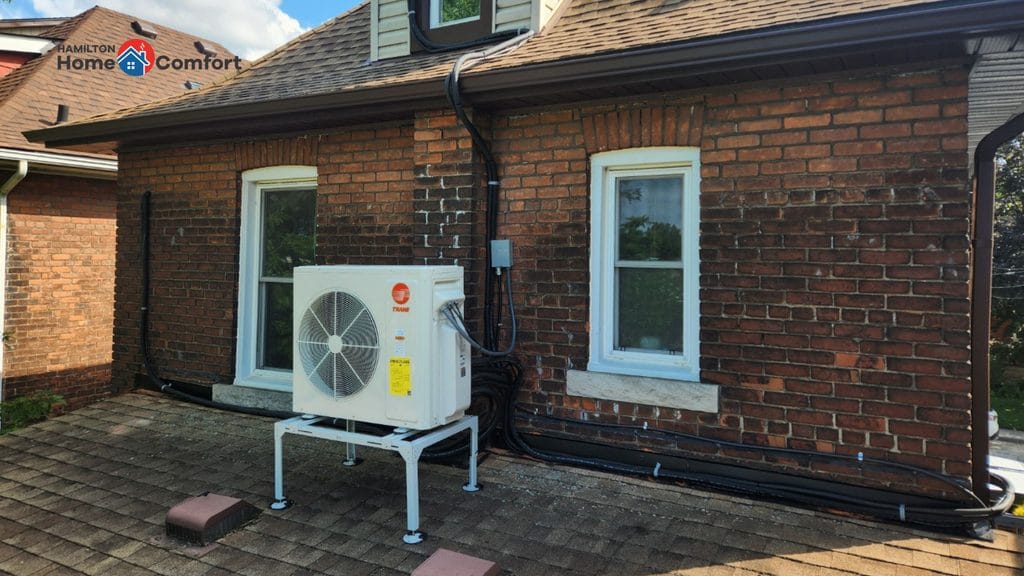
You do not necessarily have to remove your furnace to install a heat pump. Hybrid heating, also called dual-fuel heating, combines an electric heat pump with a fuel-burning furnace. The controls switch between them according to the system’s settings and outdoor conditions.
You may see this described as a “heat pump furnace” system. They are separate pieces of equipment working together.
The furnace can take over when the heat pump cannot meet the heating demand or when the controls favour furnace operation based on operating costs.
Your existing furnace may be suitable, but it’s important to check for compatibility. Its age, condition, blower performance and controls all affect whether keeping it makes sense.
What Does Heat Pump Installation Involve?
A good heat pump installation starts with your home, not a model number. Our heat pump installation service begins with assessing heating and cooling needs, ductwork and electrical requirements.
Your contractor should consider:
- Sizing: Heat loss and cooling load calculations, rather than square footage alone.
- Airflow: Whether existing ducts can handle the system’s requirements.
- Electrical capacity: Whether electrical upgrades are needed.
- Outdoor placement: Snow clearance, drainage, sound and service access.
- Backup heating: Whether it is needed and how it will operate.
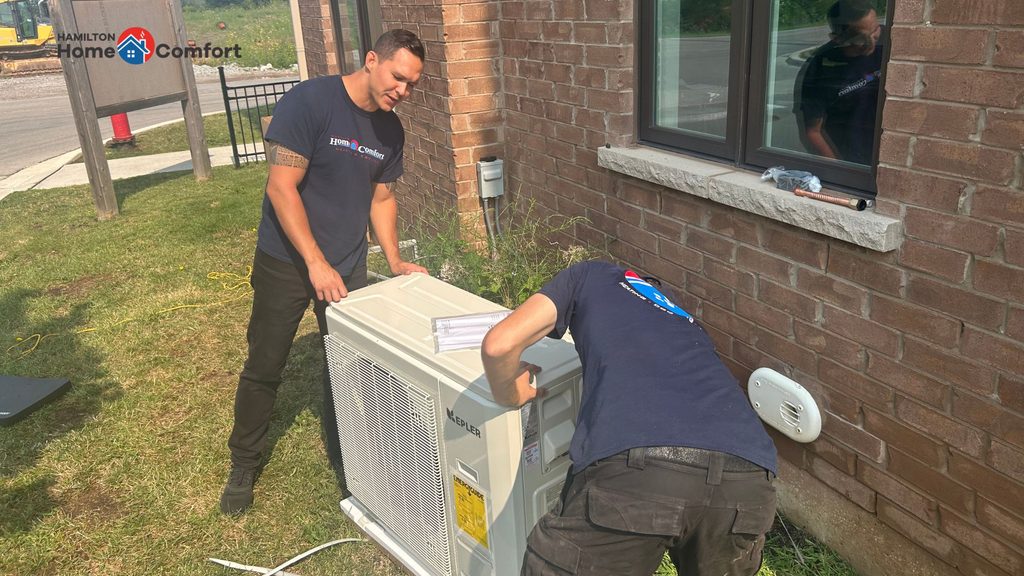
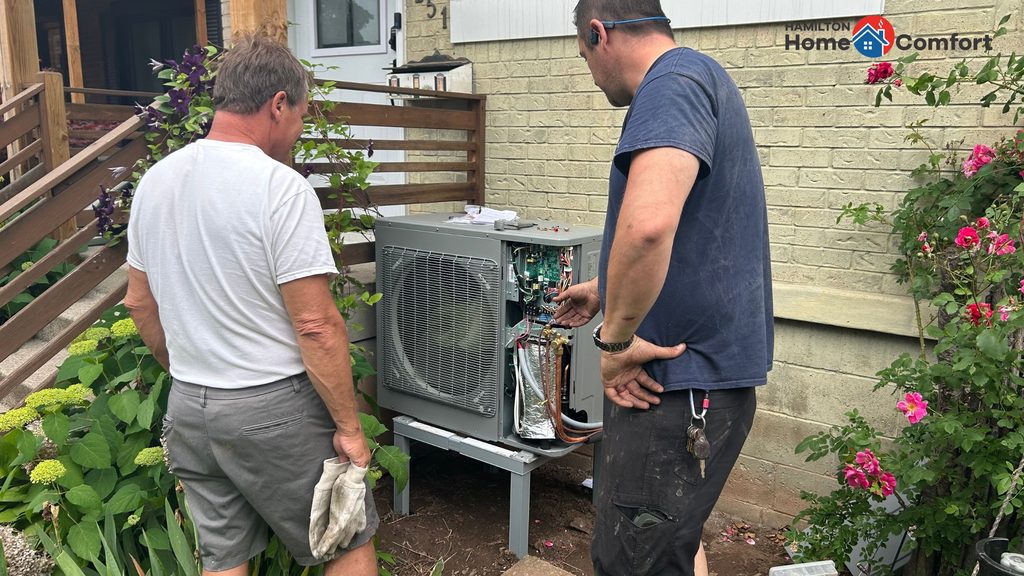
Installation includes setting up indoor and outdoor equipment, connecting refrigerant lines and electrical components, and testing operation.
Before the team leaves, ask for a walkthrough of the thermostat, filters and maintenance requirements. Our team at Hamilton Home Comfort sees most installations taking one day. However, more involved projects can take longer.
How Much Does A Heat Pump In Ontario Cost?
The cost is dependent on the home and specific needs. A straightforward installation using suitable existing ductwork is a different project from installing several ductless indoor units or upgrading electrical service.
Your quote should explain equipment, labour, electrical work, required modifications, warranties and any applicable permits.
Then consider what it will cost to run. Heat pumps are efficient, but that does not guarantee lower bills than your current gas furnace. There are several factors that affect the cost of using a heat pump: the type of heat pump, electricity prices, gas rates (if using a hybrid system), insulation, outdoor temperatures and backup heating.
Ask for an operating-cost comparison based on your home and current heating fuel. Our electric heat pump services are a starting point for exploring your options.
Ontario’s Home Renovation Savings program offers incentives for qualifying heat pumps. Check current eligibility, equipment and application requirements before purchasing. Do not assume every installation qualifies.
What Maintenance Does A Heat Pump Need?
Your heat pump may work through both heating and cooling seasons. It needs attention between them.
Check filters regularly and clean or replace them according to the manufacturer’s instructions. Keep vents unobstructed and leave the outdoor unit clear of leaves, vegetation and accumulated snow.
You can arrange professional service at the recommended intervals. Our heat pump maintenance service includes inspections, cleaning and performance checks.
Remember: if you keep a furnace in a hybrid system, it still needs regular furnace maintenance.
Our tips on reducing HVAC dust buildup explain additional ways to keep your home’s airflow pathways cleaner.
How Long Do Heat Pumps Last?
A typical heat pump lifespan is around 10–15 years, although some systems last longer. Installation quality, maintenance, climate and usage all influence longevity.
Age alone does not tell you whether replacement is necessary.
You will also need to consider repair frequency, heating and cooling performance, parts availability and warranty coverage. An older unit needing repeated expensive repairs deserves a different conversation from one that continues operating reliably.
Frequently Asked Questions About Heat Pumps
Do Heat Pumps Work During Ontario’s Coldest Days?
Cold climate models can operate well below freezing. But operating at a low temperature is different from providing enough heat for your entire home.
Your installer should compare the unit’s cold-weather heating capacity with your home’s heat loss and determine whether backup heat is needed.
Can You Install A Heat Pump Without Ductwork?
Yes. Ductless mini-splits connect an outdoor unit to indoor units. However, placement matters: one unit in a hallway may not adequately heat bedrooms behind closed doors. The design should account for your layout and which rooms need heating and cooling.
Why Does My Heat Pump Run So Long?
Many variable-speed models run for extended periods to maintain a steady temperature. Longer operation can be normal. If the house is getting colder despite continuous operation, or you notice unusual sounds or persistent heavy ice, arrange an inspection.
Should I Turn The Temperature Down Overnight?
Large thermostat setbacks can lead to slow recovery or trigger backup heating. Ask your installer about suitable settings for your equipment. A steadier temperature may work better than the schedule you used with your furnace.
Installing A Heat Pump In Ontario With Hamilton Home Comfort
Choosing and installing a heat pump starts with understanding your home and what you want from your heating and cooling system.
Learn more about heat pump installation in Ontario. At Hamilton Home Comfort, we can help you compare heat pump options, assess installation requirements and plan ongoing care. Whether you’re considering an all-electric system or keeping your furnace, start with a home assessment.
Contact Hamilton Home Comfort for heat pump installations, repairs and maintenance and make sure your heating system is ready when you need it most.
Follow Hamilton Home Comfort on Instagram and Facebook for the latest home comfort tips, company news and HVAC insights.