


When winter arrives in Hamilton and Southern Ontario, your furnace quickly becomes one of the most important systems in your home. As you read this, you may be maintaining an existing furnace in Hamilton, dealing with a sudden breakdown, or wondering whether it is time for a replacement. Understanding how your heating system works can help you make better decisions about comfort, efficiency and maintenance.
At Hamilton Home Comfort, our team of Hamilton HVAC technicians specializes in installation and maintenance throughout the city, as well as Stoney Creek, Ancaster, Binbrook, Grimsby and surrounding Southern Ontario communities. Over the years, we have seen everything from furnaces that simply needed a dirty filter replaced to older systems that stopped working completely on some of the coldest days of the year.
We also know homeowners have plenty of furnace questions. We get them all the time! How long should a furnace last? What does AFUE mean? Should you repair an older furnace or replace it? Is a heat pump better than a furnace in Ontario?
This complete furnace guide covers the fundamentals so you can better understand the heating system in your home, recognize potential problems and know when it is time to call an HVAC professional.
Understanding Your Home Furnace
A furnace is a central heating system that generates heat and distributes warm air throughout your home using a system of ducts and vents.
In many homes in the Hamilton and surrounding Golden Horseshoe areas, the furnace is powered by natural gas. When your thermostat detects that the indoor temperature has fallen below your desired setting, it signals the furnace to begin a heating cycle.
In a gas furnace, here’s what the basic process looks like:
- The thermostat calls for heat
- The furnace ignition system activates
- Gas burners produce heat
- The heat exchanger warms up
- The blower pushes air across the heat exchanger
- Warm air travels through your ductwork and into the rooms of your home
- Cooler return air travels back to the furnace to begin the process again
Several components have to work together properly. These include the:
- Thermostat
- Burners
- Heat exchanger
- Blower motor
- Flame sensor
- Air filter
- Control board
Problems with even one component can affect the performance of the entire system.
What Types Of Furnaces Are Available?
There are several furnace configurations, including:
- Single-stage furnaces. These operate at one heating output whenever they are running.
- Two-stage furnaces. They can operate at a lower or higher heating level depending on demand.
- Modulating furnaces. Make smaller adjustments to heat output to maintain a more consistent indoor temperature.
- Variable-speed furnaces. Adjust blower speed to improve airflow, comfort and efficiency.
The right option depends on your home, heating requirements and comfort priorities. Our Hamilton Home Comfort team can answer any questions about what would work best in your home and for your needs.
Choosing The Right Furnace For A Hamilton Home
Buying the largest or most powerful furnace is not necessarily the best way to heat your home.
Size matters. This is one of the most important factors when choosing a new replacement furnace.
An oversized furnace may heat the home quickly and shut off repeatedly. However, this frequent starting and stopping, known as short cycling, can affect comfort and place additional strain on the system.
Meanwhile, an undersized furnace may struggle to reach the thermostat setting during very cold weather and run for extended periods.
During one of our professional HVAC assessments, we consider factors such as:
- Home size and layout
- Insulation levels
- Windows and exterior doors
- Existing ductwork
- Air leakage
- Number of floors
- Home orientation and construction
- Heating demands during Southern Ontario winters
Hamilton Home Comfort takes the home itself into account when recommending equipment rather than simply replacing an existing furnace with another unit of the same capacity.
We have seen many older homes with a furnace that may not have been sized correctly in the first place. With a better option, homeowners can see better heating, efficiency and cost-effectiveness.
Why Hamilton’s Climate Matters In Your Furnace Choice
From cool Fall days to freezing sub-zero cold snaps… Southern Ontario homes experience substantial temperature swings throughout cooler times of the year. A heating system needs to perform reliably during prolonged cold weather while still operating efficiently during milder periods.
That is one reason two-stage and variable-capacity heating systems can be attractive options for a furnace installation. Instead of constantly operating at maximum output, they can adjust operation based on how much heat the home actually requires.
Furnace Efficiency Explained
One of the most common terms you will encounter while comparing furnaces is AFUE, or Annual Fuel Utilization Efficiency.
AFUE is expressed as a percentage and estimates how much of the fuel consumed by the furnace is converted into usable heat over a typical heating season.
For example, a furnace rated at 95% AFUE is designed to convert approximately 95% of the fuel it consumes into heat, with the remainder lost during the heating process.
However, AFUE should not be the only factor in your decision.
The real-world performance of a furnace also depends on:
- Proper furnace sizing
- Quality of installation
- Ductwork condition
- Airflow
- Insulation
- Thermostat settings
- Regular maintenance
A very efficient furnace that is incorrectly sized or installed will not necessarily provide the comfort or efficiency you expected.
What Is A High-Efficiency Furnace?
High-efficiency gas furnaces are designed to capture more heat from the combustion process before exhaust gases leave the home.
Many also incorporate features such as two-stage heating and variable-speed blower motors.
For Hamilton homeowners replacing much older equipment, upgrading to a modern high-efficiency furnace may improve both energy use and indoor comfort.
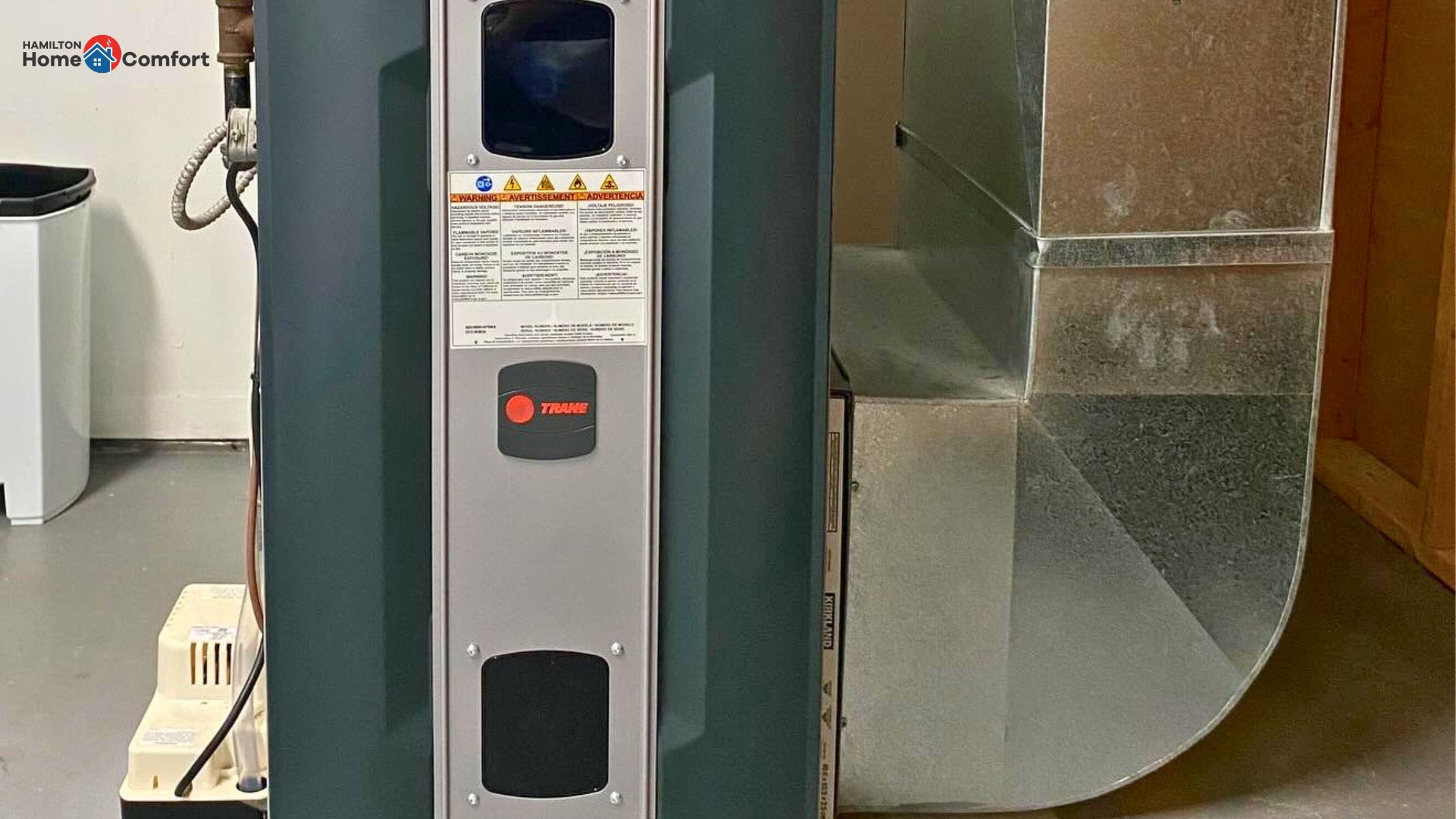
Hamilton Home Comfort installs high-efficiency furnace systems from established manufacturers including Trane and Lennox, with equipment selected according to the requirements of the home.
Furnace Installation In Hamilton
A professional furnace installation in Hamilton involves much more than bringing a new appliance into your basement and connecting it to existing ductwork.
Before installation begins, your HVAC contractor should assess the home, determine the appropriate heating requirements and inspect existing components that will interact with the new system.
A typical installation can include:
- Disconnecting and removing the existing furnace
- Preparing the furnace area
- Installing and connecting the new equipment
- Making required venting modifications
- Connecting gas and electrical components
- Connecting the furnace to existing ductwork
- Installing or connecting the thermostat
- Testing airflow
- Checking safe furnace operation
- Calibrating and testing the completed system
- Explaining operation and maintenance to the homeowner
Most straightforward residential furnace installations can be completed within a day, although ductwork modifications, access problems and additional equipment can affect the timeline.
We had a Grimsby homeowner whose furnace failed overnight while outdoor temperatures were well below freezing. Because the required equipment and installation team were available, a replacement was completed the same day, and the home’s heat was restored by that evening.
That is an emergency situation. Whenever possible, it is better to begin considering furnace replacement in Hamilton before your existing system reaches the point of complete failure.
Read about the typical furnace installation timeline so you can plan your installation.
Furnace Maintenance And Seasonal Care
Southern Ontario winters can be hard on furnaces. Regular maintenance can help keep your furnace operating safely and efficiently while identifying smaller issues before they become larger repairs.
Furnace maintenance may involve inspecting the heat exchanger, burners, blower motor, ignition components, flame sensor, thermostat and electrical connections.
Airflow should also be checked.
One of the easiest things homeowners can do themselves is monitor the furnace filter.
A dirty or clogged filter restricts airflow. That means the furnace may have to work harder to move heated air throughout the home.
Homeowners should also:
- Keep furnace vents and return-air grilles unobstructed.
- Check filters regularly and replace them when required.
- Keep storage away from the furnace.
- Pay attention to unusual sounds or odours.
- Test the furnace before the first major cold spell.
- Schedule professional maintenance regularly.
Read more about DIY furnace maintenance and furnace cleaning tips that homeowners should know.
Hamilton Home Comfort recommends preventative furnace maintenance and offers annual tune-ups that include inspection and carbon monoxide checks.
Small things can make a surprisingly big difference. Our Hamilton Home Comfort technicians have even encountered restricted HVAC airflow caused by objects blocking vents and cold air returns. It is a good reminder that furnace performance depends on the entire airflow system, not just the equipment sitting in your basement.
Learn more about how to prepare your furnace for the Fall and Winter heating seasons.
Common Furnace Problems And Repairs
Furnaces have a tendency to break down at the most inopportune times.
For example, one Stoney Creek family contacted Hamilton Home Comfort after their furnace stopped producing heat overnight during particularly cold winter weather. With young children in the home, restoring heat quickly became an immediate priority. A technician was able to get the heating system operating again that morning.
While a complete loss of heat is obvious, other furnace problems can develop more gradually. This is why regular furnace maintenance – both by the homeowner (simple maintenance and cleaning) and by an experienced technician- is important. You can catch some issues before they get worse.
Furnace Is Blowing Cold Air
Cold air coming from the vents can have several causes, including thermostat settings, ignition problems, airflow restrictions or issues within the furnace itself.
Furnace Is Making Strange Noises
Some operational noise is normal, but banging, grinding, rattling, or squealing can indicate loose components, blower problems or mechanical wear.
Furnace Keeps Turning On And Off
Repeated short heating cycles are known as short cycling. Causes can range from a clogged filter or thermostat problem to an incorrectly sized furnace.
Some Rooms Are Colder Than Others
Uneven heating does not automatically mean the furnace itself is failing. Restricted airflow, ductwork problems, insulation differences or poor system sizing can all contribute to temperature differences throughout the home.
Furnace Will Not Start
The issue may involve the thermostat, electrical supply, ignition system, flame sensor or another furnace component.
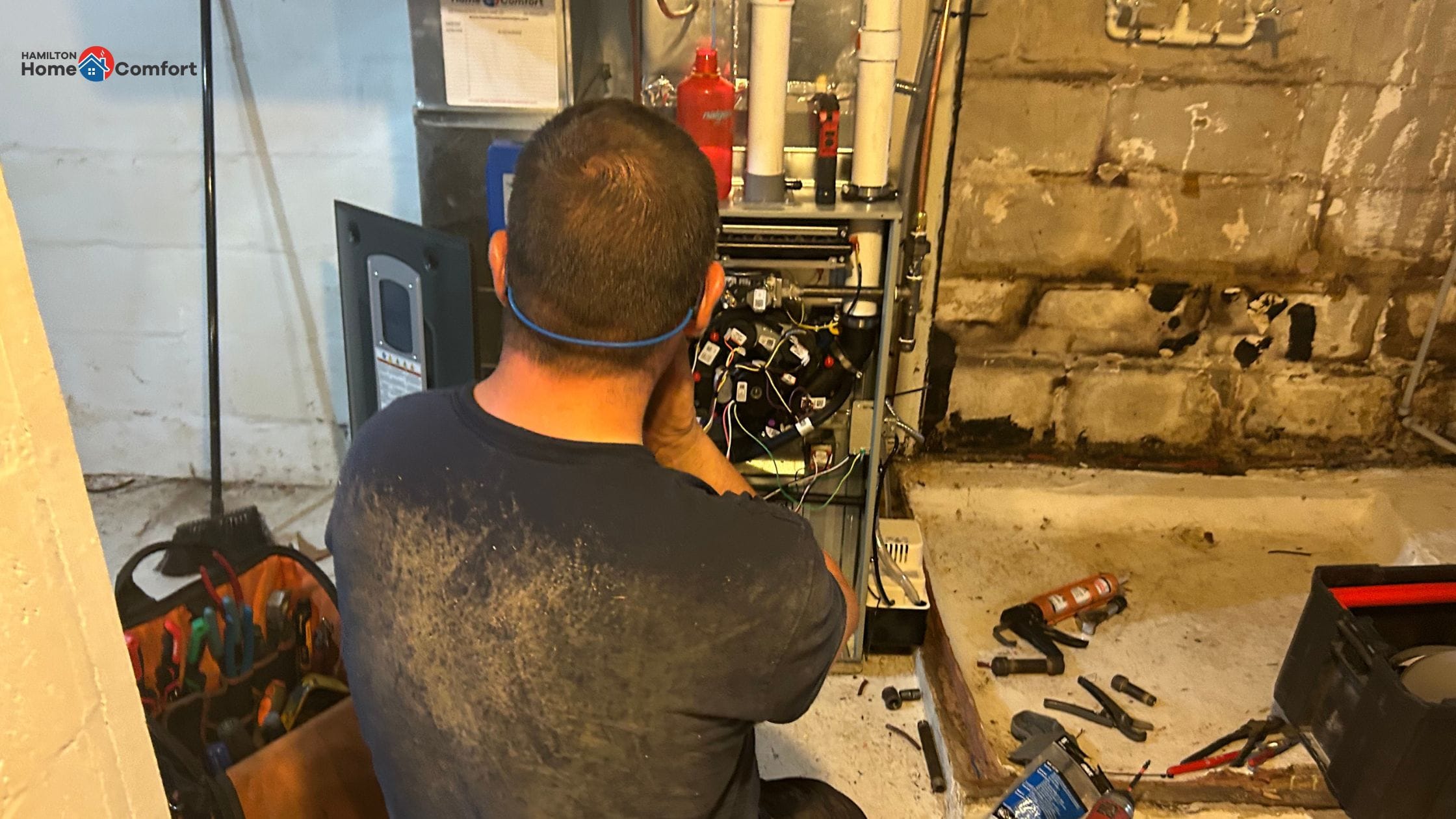
If basic checks such as confirming the thermostat settings and checking the filter do not solve the problem, it is time for professional furnace troubleshooting.
NOTE: Gas, electrical and combustion-related furnace repairs should always be handled by a qualified technician.
When Should You Replace Your Furnace?
There is no specific age at which a furnace must be replaced. We see well-maintained furnaces operating reliably for many years. On the other hand, we’ve encountered newer furnaces that have issues due to poor maintenance.
Maintenance is one of the most important factors for furnace longevity.
Instead of looking at age alone, consider the overall condition and performance of the furnace.
Signs it may be time to discuss furnace replacement include:
- The furnace is approaching or beyond 15–20 years old.
- Repairs are becoming more frequent.
- Replacement components are becoming difficult to source.
- Heating bills are increasing without an obvious reason.
- The furnace struggles to maintain comfortable temperatures.
- Some parts of the home remain consistently cold.
- The system is noticeably noisier than it once was.
- A significant component has failed.
- The furnace has developed a serious safety problem.
Hamilton Home Comfort has worked with homeowners who were repairing their furnaces multiple times within a single heating season. At that point, continuing to repair an aging system may no longer make sense compared with investing in newer equipment.
The decision is ultimately a comparison between the furnace’s current condition, repair requirements, expected remaining life, efficiency and the cost and benefits of replacement.
A reputable HVAC contractor should explain both repair and HVAC replacement options rather than assuming a new furnace is always necessary. If you’re looking at furnace replacement in Hamilton and surrounding areas, let’s connect to get your furnace assessed and to help you solve your heating problems.
Furnace Vs. Heat Pump For Ontario Homes
One question Hamilton homeowners are asking more frequently is whether they should install another furnace or switch to a heat pump.
The systems produce heat differently.
A gas furnace creates heat by burning natural gas. An electric air-source heat pump transfers heat between the outdoors and indoors using refrigeration technology.
Heat pumps also reverse operation in the summer, allowing one system to provide both heating and air conditioning.
Is A Heat Pump Good For Ontario Winters?
Modern cold-climate heat pumps are specifically designed to continue providing heat at temperatures below freezing, making heat pumps a more practical option in Southern Ontario than they once were.
However, choosing between a furnace and heat pump is not necessarily an either-or decision.
Some Ontario homeowners use a hybrid or dual-fuel system, combining a heat pump with a gas furnace. The heat pump can provide heating during many conditions, while the furnace provides supplemental or backup heat when appropriate.
The best option depends on your:
- Existing HVAC system
- Electrical service
- Home construction
- Ductwork
- Energy priorities
- Cooling needs
- Budget
- Long-term plans for the home
If your furnace and air conditioner are both approaching replacement age, it can be particularly worthwhile to compare a traditional furnace-and-AC combination with heat pump options before purchasing new equipment.
Frequently Asked Furnace Questions
How Long Does A Furnace Last In Ontario?
Many furnaces can remain in service for around 15 to 20 years, although maintenance history, installation quality, equipment quality and usage can significantly affect lifespan. Age should be considered alongside repair frequency, efficiency and overall performance.
How Often Should A Furnace Be Serviced?
Annual professional furnace maintenance is commonly recommended. Having the system inspected before or near the beginning of the heating season can help identify problems before the coldest part of winter.
How Often Should I Change My Furnace Filter?
There is no universal schedule. Filter type, household size, pets, indoor air quality and furnace usage all affect how quickly a filter becomes dirty. Check it regularly and follow the furnace and filter manufacturer’s recommendations.
What Is The Best Furnace For A Hamilton Home?
There is no single best furnace for every Hamilton homeowner. The right system should be properly sized for the home, provide appropriate efficiency and features, work with the existing HVAC system and fit the homeowner’s comfort priorities and budget.
How Do I Know What Size Furnace I Need?
Furnace sizing should be based on the home’s heating load rather than square footage alone. Insulation, windows, air leakage, home layout and Southern Ontario winter conditions should all be considered.
Should I Repair Or Replace My Furnace?
Repair often makes sense when the furnace is relatively young, has otherwise been reliable and needs a straightforward repair. Replacement becomes more attractive when an older furnace experiences recurring problems, declining efficiency or a major component failure.
Can I Install A Furnace Myself?
Furnace installation involves gas, electrical, ventilation and combustion-safety considerations and should be completed by qualified HVAC professionals. Improper installation can affect efficiency, reliability, warranty coverage and safety.
Can A Heat Pump Replace My Furnace In Hamilton?
In some homes, yes. Cold-climate heat pumps can provide heating and cooling in Southern Ontario. Other homeowners may benefit from a hybrid system that combines a heat pump with a furnace. The right configuration depends on the home and existing infrastructure.
When Is The Best Time To Replace A Furnace?
If your furnace is still operating but showing signs of age or declining performance, replacing it before peak winter allows you to plan your equipment choice instead of making an urgent decision during a breakdown.

Get Expert Help With Your Furnace In Hamilton
Your furnace does not need much attention when everything is working properly, but understanding the basics can make a major difference when something changes.
Know how your system normally sounds and performs. Change filters when necessary. Keep vents clear. Arrange regular maintenance. And if your furnace starts cycling frequently, struggling to heat the home or requiring repeated repairs, have it inspected before the problem becomes an emergency.
At Hamilton Home Comfort, we provide furnace installation, furnace repair and maintenance for homeowners throughout Hamilton, Stoney Creek, Ancaster, Binbrook, Grimsby and surrounding Southern Ontario communities. As a family-owned HVAC company serving the Hamilton area since 2007, the team works with homeowners whether they need a simple repair, preventative service or help choosing a new furnace in Hamilton. Our services also include air conditioning, fireplaces and water heater installations and repairs.
Hamilton Home Comfort has been rated one of the top five HVAC companies in Hamilton, Ontario.
If you are considering a furnace replacement in Hamilton, having trouble with your existing system or simply want to prepare your furnace for another Ontario winter, contact Hamilton Home Comfort to schedule service or request an estimate.
Follow Hamilton Home Comfort on Instagram and Facebook for the latest home comfort tips, company news and HVAC insights.