

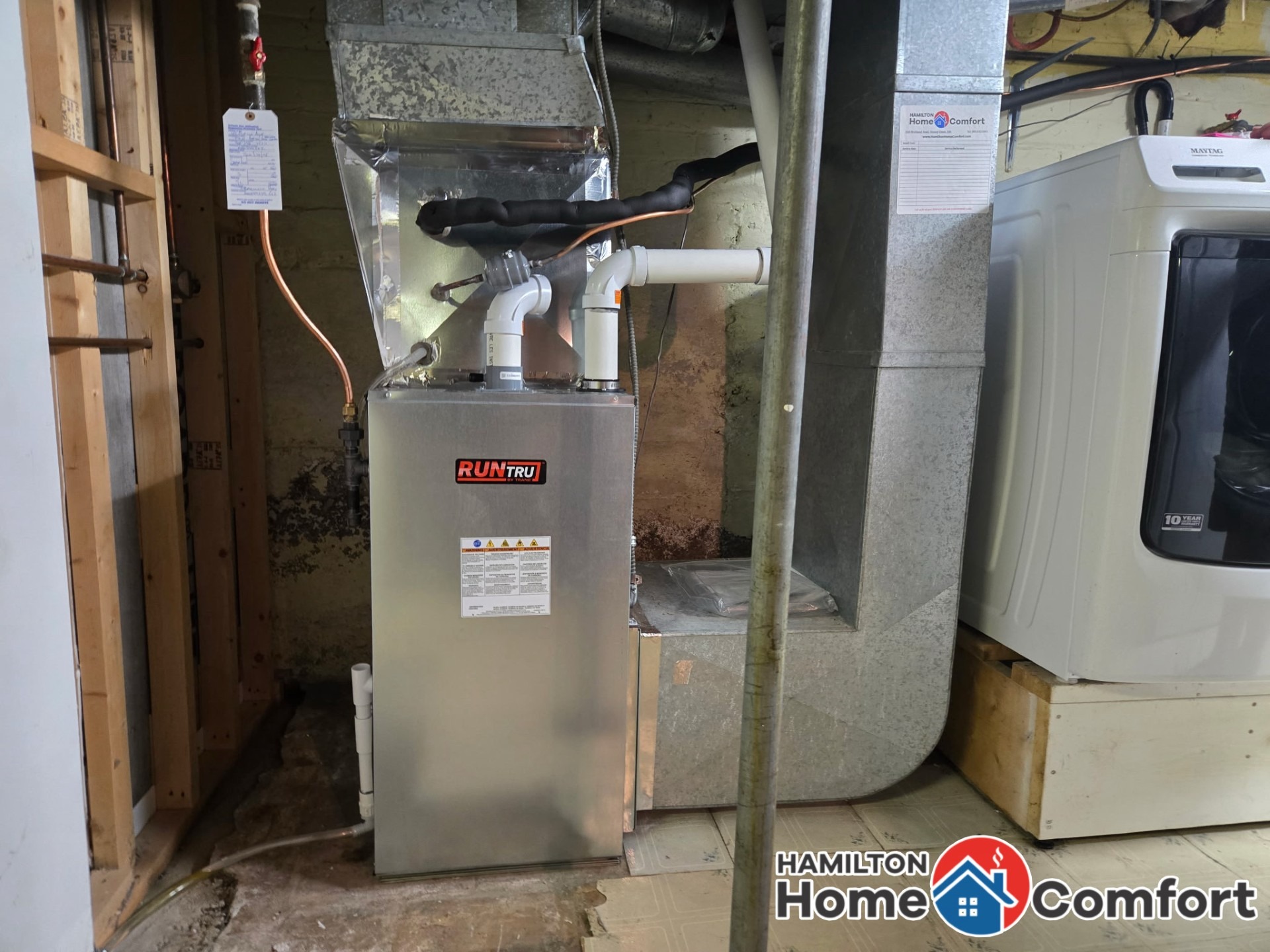
Split-level homes in Riverdale, Hamilton have a lot of character, but their unique layouts can create noticeable comfort differences between floors. Homeowners near areas like Centennial Parkway, Queenston Road, Riverdale East Park, and the Dominic Agostino Riverdale Community Centre often experience the same challenge: One level feels comfortable while another is too warm, too cool, or lacking airflow.
At Hamilton Home Comfort, we help homeowners understand whether these issues are caused by the home’s design, aging HVAC components, or airflow problems that can be corrected with the right adjustments.
Why Riverdale Split-Levels In Hamilton Struggle With Airflow
Split-level homes naturally create airflow challenges because each floor reacts differently to temperature changes. Warm air rises through stairwells, which can make upper bedrooms warmer in summer and create uneven heating patterns in winter. Rooms that are separated by multiple levels, closed doors, or long duct runs may also receive less conditioned air.
Many older Riverdale homes were built with duct systems that were not designed for today’s comfort expectations. Aging ductwork, limited return-air pathways, and previous renovations can affect how efficiently air moves throughout the home.
Thermostat placement can also contribute to uneven temperatures. A thermostat located on the main level may reach the desired temperature before upstairs rooms have fully cooled or heated, causing the system to shut off too early.
Practical Ways To Improve Comfort Between Levels
Before considering major HVAC changes, homeowners can try several simple adjustments:
- Adjust vent positioning: Make sure supply vents are open and directed toward areas that need more heating or cooling.
- Replace air filters regularly: A clogged filter restricts airflow and can make some rooms feel weaker than others.
- Check duct dampers: Balancing dampers can help redirect airflow between levels when accessible.
- Use the fan setting strategically: Running the HVAC fan periodically can help circulate air more evenly throughout the home.
- Seal accessible duct leaks: Leaks in exposed ductwork can reduce the amount of conditioned air reaching certain rooms.
- Keep supply and return vents clear: Furniture, rugs, or closed-off spaces can limit circulation.
- Consider zoning or duct updates: Persistent temperature differences may require professional solutions such as zoning controls, return-air improvements, or duct modifications.
Closing multiple vents in unused rooms is usually not the best solution. It can increase pressure inside the duct system and reduce overall airflow instead of redirecting it where it is needed.
Seasonal HVAC Challenges In Hamilton’s Riverdale Homes
Hamilton’s changing seasons can make split-level airflow problems more noticeable. During humid summers, upper floors often absorb more heat from sunlight and attic spaces, causing bedrooms to feel warmer than lower levels. Managing indoor humidity and maintaining proper circulation can help improve comfort.
In winter, cold temperatures can expose weak airflow areas, especially rooms affected by older duct layouts, insufficient returns, or insulation concerns. If a room feels cold but air is still moving strongly from the vent, insulation or air sealing may be contributing to the problem. However, weak airflow from vents often points toward duct design, return-air limitations, or HVAC performance issues.
Seasonal maintenance can also help prevent small issues from becoming larger comfort problems. Homeowners can improve indoor conditions by managing spring HVAC humidity and keeping systems maintained before allergy season and extreme temperatures arrive.
| Season | Helpful Adjustment | What To Watch For |
| Summer | Improve circulation, check returns, reduce upstairs heat gain | Hot bedrooms and short cooling cycles |
| Winter | Check filters, inspect airflow, adjust dampers carefully | Cold rooms and uneven heating |
| Spring | Focus on humidity control and system maintenance | Damp areas or stale air |
| Fall | Test airflow before heating demand increases | Rooms becoming harder to heat |
Get Help Balancing Comfort In Your Hamilton Home
If your Riverdale home has rooms that remain too hot or cold despite basic adjustments, a professional airflow assessment can identify the real cause. Our HVAC specialists can evaluate airflow levels, duct conditions, return-air performance, thermostat placement, and potential insulation concerns.
At Hamilton Home Comfort, we help homeowners find practical solutions that improve comfort without unnecessary upgrades. Whether your split-level home needs better balancing, duct improvements, or a more advanced HVAC approach, a proper assessment can help you make the right decision.