

Wondering at what temperature does a heat pump stop working? It’s one of the most common questions Ontario homeowners ask when considering a heat pump for winter heating.
The answer depends on the type of heat pump, the model and how much heating your home needs. Many newer air-source heat pumps have minimum operating temperatures around -15°C to -25°C, while certain cold climate models can operate at even lower temperatures.
However, operating is not the same as producing enough heat to keep your entire home comfortable. The exact model, your home’s heat loss and your backup heating system all matter. Let’s look more at heat pump operating temperature and how it works in our Canadian climate.
What We Tell Hamilton Homeowners
At Hamilton Home Comfort, we hear this question from homeowners all the time: “If it’s freezing outside, how is a heat pump supposed to heat my house?” It’s a fair concern in Hamilton and Stoney Creek.
The answer depends on what type of heat pump you choose. We sell both standard heat pumps and cold climate heat pumps, and we would not recommend one simply because the label sounds impressive. We look at how the system will actually perform in your home during an Ontario winter.
Standard vs. Cold Climate Heat Pumps: What is the Difference?
A standard air-source heat pump is designed to provide both cooling and heating, and may be a practical option where the system is expected to handle milder weather while a furnace covers colder periods. As outdoor temperatures fall, heating capacity and efficiency generally decrease. Depending on the model, the unit may reach a point where it cannot meet the home’s heating needs or must stop operating.
A cold climate heat pump is engineered and tested for stronger low-temperature heating performance. Features can include variable-capacity compressors, improved controls and equipment designed to retain more heating capacity in colder air. ENERGY STAR’s cold climate criteria, for example, assess efficiency and retained heating capacity at -15°C (5°F). That designation is meaningful, but it does not promise full heating capacity at -25°C or eliminate the possible need for backup heat.
Hamilton Home Comfort offers both categories because not every homeowner needs the same solution.
A standard heat pump paired with an existing gas furnace may be sensible for one home. Another home may benefit from a cold climate unit designed to cover more of the winter heating season. An experienced HVAC contractor should determine the right fit instead of treating either option as universally better.
Heat Pump Operating Temperatures: A Practical Guide
Above 0°C: Air-source heat pumps generally operate efficiently, provided they are sized and installed correctly.
Around -5°C to -15°C: Many modern heat pumps continue heating normally, although heating capacity and efficiency depend on the model and conditions.
Around -15°C to -25°C: Some standard heat pumps are approaching their published operating limits, while many cold climate heat pumps are engineered to keep providing useful heating. Available capacity varies significantly by model.
At -30°C: Certain specialized cold climate models may continue operating, but that capability must be verified in the exact model’s technical specifications. Do not assume any Trane, Goodman or Lennox heat pump can operate at this temperature.
These ranges are guidance, not universal specifications. Always check the manufacturer’s published performance data for the exact indoor/outdoor equipment combination.
Three Temperatures Homeowners Should Understand
The minimum operating temperature is the outdoor temperature below which the manufacturer does not specify the heat pump to operate.
The thermal balance point is where the heat the unit can deliver equals the heat the home is losing. Below that point, the home may need additional heat even though the heat pump is still running.
The economic balance point is where heating with another source, such as a gas furnace, may become less expensive based on current electricity and natural gas prices. This point can be different from the thermal balance point.
This distinction matters. “Still works” and “can heat my entire home efficiently” are not the same question.
Can a Heat Pump Work at -20°C or -25°C?
Yes, some models can. A properly specified cold climate heat pump may continue producing useful heat at -20°C or -25°C. How much heat it delivers is the part that deserves attention.
On an equipment quote, ask for the heating capacity at low outdoor temperatures, not only its advertised tonnage or summer efficiency rating. ENERGY STAR’s cold climate criteria evaluate low-temperature performance at approximately -15°C (5°F), including minimum capacity retention and efficiency. They do not mean every qualifying model can heat every home without backup in extreme cold.
Why Does My Heat Pump Struggle When it Gets Really Cold?
As outdoor temperatures fall, an air-source heat pump generally has less accessible heat to move indoors. At the same time, your house loses heat faster. Poor insulation, air leakage, undersized equipment and restricted airflow can make the difference more noticeable.
Frost can also accumulate on the outdoor coil; the system periodically enters a defrost cycle to clear it. A short defrost cycle is normal. Persistent heavy ice, repeated faults or a house that cannot maintain its thermostat setting deserve professional attention.
Do I Need a Gas Furnace as Backup?
Not every home does, but backup heating is often worth discussing in Ontario. For households that already have natural gas, we frequently recommend looking at a dual fuel setup: a cold climate heat pump provides heating when conditions make sense, and a compatible gas furnace takes over at a programmed changeover temperature.
That setting should not be copied from a neighbour’s house. It depends on the heat pump’s low-temperature output, the home’s heat loss, the furnace, utility rates and the owner’s comfort priorities. Homes without gas may use properly designed electric supplemental heat or another suitable backup system.
Which Heat Pump Brands Do We Carry?
Hamilton Home Comfort carries and recommends Trane, Goodman and Lennox heat pumps, with both standard and cold climate choices available depending on the selected equipment. No manufacturer’s entire lineup should be treated as rated as a cold climate heat pump. We compare actual model specifications, winter heating output, operating costs, and the equipment already installed in your home.
Trane: Worth considering for homeowners comparing advanced comfort features and varying system configurations.
Goodman: Offers options for homeowners weighing upfront cost, performance and compatibility with existing systems.
Lennox: Offers a range of heat pumps, including systems with advanced capacity control on selected models.
The best choice is determined by the actual low-temperature performance data, proper sizing, compatible indoor equipment and installation quality.
What If I Am Replacing My Air Conditioner?
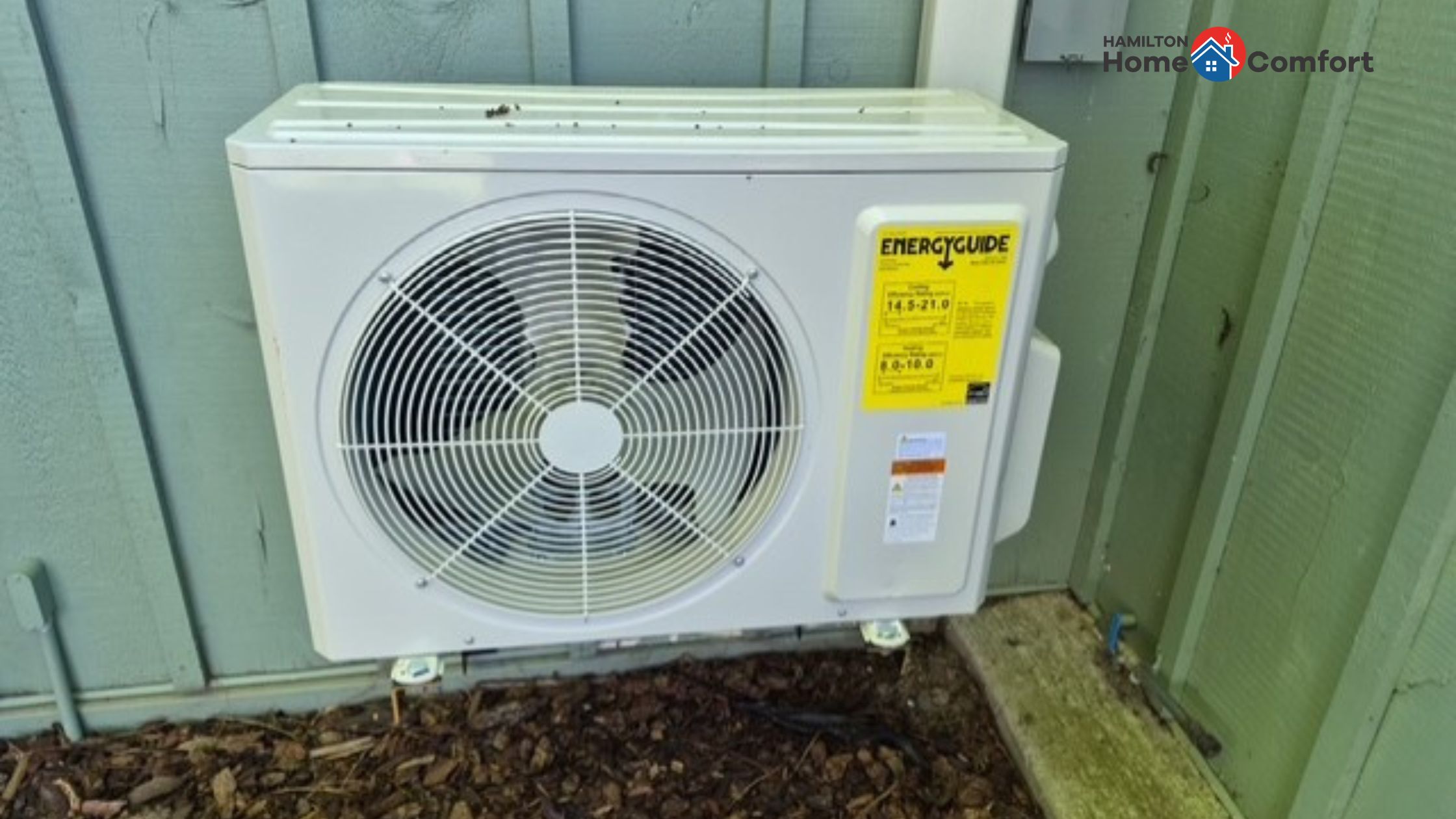
If your home has a central air conditioner and forced-air ductwork, a central ducted heat pump may be an option when the air conditioner needs replacing. It looks similar to a conventional outdoor AC unit and uses an indoor coil and your ductwork to distribute conditioned air.
Unlike an AC, it can reverse operation and heat the home as well. Compatibility with the furnace, indoor coil, controls, electrical service and ductwork needs to be checked before quoting. Central ducted heat pumps are available in standard and cold climate versions.
What is the Difference Between a Ductless Heat Pump and a Central Heat Pump?
The phrase “regular heat pump” usually refers to a central ducted heat pump that replaces a conventional AC unit. It connects to compatible indoor equipment and delivers heated or cooled air through the home’s existing ductwork. For homes with a forced-air furnace, this can be a straightforward concept, but the equipment still needs to be properly matched and installed.
A ductless heat pump, often called a mini-split, uses one outdoor unit connected to one or more indoor units typically mounted on walls or ceilings. It heats or cools the areas served by those indoor units without relying on the home’s main ductwork. Ductless systems are especially useful for additions, older homes without ducts, finished garages, and rooms that are hard to keep comfortable. A single indoor head does not automatically heat every room in the house.
Here is the distinction homeowners often miss: ducted versus ductless describes how air is delivered indoors; standard versus cold climate describes low-temperature heating capability. You can purchase cold climate ductless systems and cold climate central ducted systems. A ductless mini-split is not automatically a cold climate heat pump, and a central ducted heat pump is not automatically unsuitable for winter.
For a homeowner replacing an existing central AC, a ducted heat pump is often the natural option to investigate first. For a home without ductwork or a specific problem area, ductless may make more sense. Some homes benefit from both. Our job is to review the layout and existing HVAC system rather than recommend a one-size-fits-all product.
Signs Your Heat Pump May Need Service
A heat pump running continuously on a very cold day is not automatically broken. But if your indoor temperature keeps falling, the outdoor unit is encased in ice, airflow is unusually weak, or error codes appear, it is time to investigate. Check that the filter is clean and that snow is not blocking the outdoor unit, but do not chip ice off the coil or attempt refrigerant repairs yourself.
Frequently Asked Questions
Does a heat pump stop working at freezing?
No. A heat pump does not automatically shut down at 0°C.
Will a heat pump work at -30°C?
Certain cold climate models are designed to operate at this temperature. Verify the exact model’s specifications, and the need for backup heat.
At what temperature should my furnace take over?
There is no universal answer. The changeover point should be set using your home’s heating needs, equipment data and local energy costs.
Can a heat pump heat an entire Ontario home?
Yes, in appropriately designed installations with a cold climate heat pump. Other homes need supplemental heat during the coldest weather.
Why is my heat pump blowing cooler air than my furnace?
Heat pumps commonly deliver air that feels less hot than gas-furnace supply air. That alone does not indicate a problem.
Is a ductless heat pump better in cold weather?
Not automatically. Cold-weather performance depends on the exact equipment, not whether it has ducts. Both ductless and central systems are available in cold climate configurations.
Should I choose a standard or cold climate heat pump in Hamilton?
That depends on how much winter heating you expect the heat pump to provide, your existing furnace, your home’s heat loss and budget. Ask an HVAC professional to review the actual low-temperature performance figures before deciding.
Heat Pump Installation in Hamilton and Stoney Creek
Still wondering at what temperature does a heat pump stop working? Let’s connect. If you are looking into a heat pump in Hamilton, Stoney Creek, Ancaster, Dundas, Binbrook, Grimsby, Burlington or the Niagara region, the first decision is not simply which brand to buy. We need to determine whether a standard or cold climate heat pump is appropriate, whether a ducted or ductless installation fits the property, and what should provide heat when outdoor temperatures are exceptionally low.
At Hamilton Home Comfort, we supply and install standard and cold climate heat pump options from Trane, Goodman and Lennox. As HVAC professionals, we review the home’s heating load, existing furnace and ductwork, compatible equipment and the published low-temperature performance of the actual model before recommending a setup.
The right recommendation may be a central heat pump that replaces your AC, a ductless mini-split, a dual fuel system or a more conventional heating and cooling replacement.
Contact Hamilton Home Comfort to discuss heat pump installation and your heating and cooling options.
Follow Hamilton Home Comfort on Instagram and Facebook for the latest home comfort tips, company news and HVAC insights.
Quality Craftsmanship. Quality Service. No Shortcuts.